Sabtu, 12 November 2022

Here are 5 Interesting Backpacker Travel Options Near Mandalika

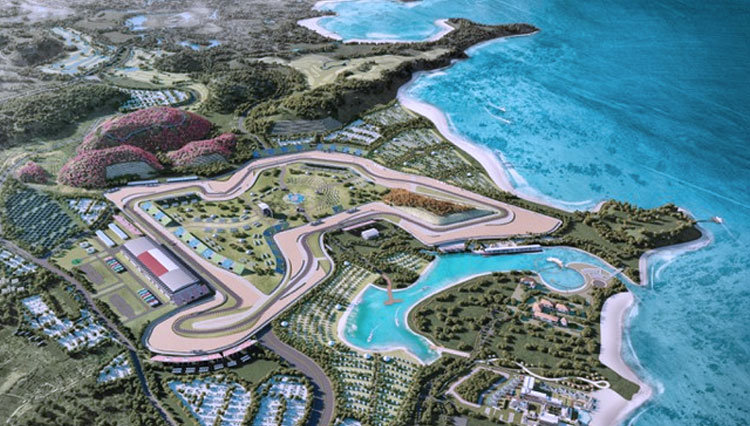
    You will undoubtedly concur if Mandalika is deemed deserving of hosting the 2022 MotoGP due to his attractiveness. Numerous 2022 MotoGP competitors upload pictures of Mandalika on their social media pages right away, which serves as confirmation. You can also arrange a thrilling road trip to Mandalika if you're a fan of MotoGP and eager to see your hero in action. Why? You know, there are lots of tourist sites close to the Mandalika Circuit that you have to document as evidence of your visit. Curious? Let's look at some travel suggestions!


Trekking to Bukit Selong, first

    Trekking to Bukit Selong is a necessary component of every Mandalika backpacking trip. The challenging ascent to this hill pays off with a magnificent and breathtaking natural panorama. It is undoubtedly artistic to take pictures of the vibrant paddy fields with Mount Rinjani in the background at the hexagonal photo location. It seems sense that only here is the best spot for trekking, given the number of stairs needed to ascend this 1,800 masl slope.


Exploration of Benang Kelambu Waterfall

    It's beneficial for you to cool yourself at Benang Kelambu Waterfall after perspiring. The only waterfall that differs from the others is formed like a curtain or mosquito net and lacks a river. Crystal-clear waterfalls appear in the crevices of the vine-covered cliffs. The Benang Stokel Waterfall is situated next to the Benang Kelambu Waterfall at the base of Mount Rinjani. Additionally, the affordable admission costs attract both domestic and international visitors to this waterfall.


Discover Danau Biru's beauty (Blue Lake)

    The list of Lombok backpacker itineraries must include this unusual lake. An outstanding memory from Mandalika will undoubtedly be seeing the blue sky reflect on the Danau Biru. The beauty of Danau Biru, which is situated in the Nuraksa Protected Forest Area, is comparable to a soothing natural pool. There are other places where swings can be photographed against the gradation of the lake's shoreline and the shade of the trees. One kilometer from residential areas, you may perform soft trekking here, so getting there is not too tough.


Gratified Water Play at Nambung Beach

    Swimming at Nambung Beach is an experience you shouldn't pass up while travelling in Mandalika. This beach has its own icon, a waterfall, and its exoticism is on par with other beaches in Mandalika. If waterfalls are typically found in high or humid areas, this one is in the middle of a beach. If you play near the rapid waterfalls that rush between the beach rocks at Nambung Beach, playing in the water is considerably more enjoyable.


Learn to weave the Sukarara Tourism Village-specific songket

    If you're through exploring Mandalika's surrounding natural beauties on foot, don't forget to visit the Sukarara Tourism Village for some cultural tourism. You may learn to weave the traditional songket cloth in this village, which has been there since the 14th century. In this hamlet, weaving songket cloth has become a skill that is acquired from an early age. You gain knowledge from a reputable songket weaver. Even though he still utilizes traditional equipment, the finished woven fabrics are no joke—at least, not until they are offered for sale on a large scale.

6 Rarely Known Interesting Facts About Komodo Island

     Komodo Island continues to be one of Indonesia's premier tourist destinations. Komodo Island, which is a part of the East Nusa Tenggara (NTT) Archipelago Cluster, attracts both domestic and international visitors who want to observe the population of extinct species up close.

    Additionally, Komodo Island is still relatively natural and offers stunning natural landscapes. In addition to mountain views, the Komodo National Park region also offers direct access to the underwater beauty, which is still highly alluring and home to vast coral reef systems and numerous fish species.


    Komodo Island has more charms to offer. Even now, not many people are aware of many fascinating facts regarding Komodo Island. Curious? Come ahead, look at these fascinating Komodo Island facts:


Old Animal Shelter

    As its name suggests, Komodo Island has evolved into a "home" or habitat for extinct species that have been around for a very long time. Thousands of Komodo dragons have made this island their home ever since it was discovered in 1910.


Encounter Dragons Up Close

    If you've only ever seen dragons on television, you can get a close-up view of one on Komodo Island. Just that you're instructed to keep a 300-meter space between you and the dragons. This is due to the fact that this extinct monster, which can grow to a length of 3 meters and weigh up to 70 kg, is a wild animal with poisonous saliva.


Animals Abound on Komodo Island.

    Many people believe that Komodo Island solely has dragons. In actuality, Komodo Island is home to a wide variety of species. starting with numerous animal species, several bird species, and various additional species of reptiles.


World Heritage Sites Are Included.

    The second intriguing fact is that in 1991, UNESCO named Komodo Island a World Heritage Site. This is due to the fact that Komodo Island falls under the category of natural locations with unique beauty and occurrences.


One of The World's Seven Wonders

    Komodo Island is not only a World Heritage Site, but in 2011 it was also named one of the Seven Wonders of the World. It is impossible to separate Komodo Island's selection as one of the seven wonders of the world from its privileges.


One of The Top Travel Places

    Komodo Island has been named one of the top tourist destinations in addition to being a World Heritage Site and one of the Seven Wonders of the World. Komodo Island is listed as one of the top 10 places to visit in the world in the July 2017 issue of National Geographic.

    After reading this article, you should visit Komodo Island right?

Selasa, 08 November 2022

Several Art Installation Works Are Present at Ngurah Rai Airport Before the G20 Summit

 This piece of art serves as both a showcase for Indonesia's cultural richness and a powerful marketing tool. an introduction to Indonesia


    In advance of the G20 Summit, which will take place on November 15–16, 2022, a number of Balinese artists displayed their work in the arrival area of the international terminal at Ngurah Rai International Airport, Bali.

    When the delegates of the G20 Summit arrive in Bali, this art installation that reveals a lot about Balinese culture will be a fascinating experience. The delegates are anticipated to learn more about the richly diverse culture of the Balinese people and their way of life. Including the idea of Tri Hita Karana, a doctrine that encourages people to work toward a peaceful coexistence with God, other people, and the natural world.

    Sandiaga Salahuddin Uno, Minister of Tourism and Creative Economy (Menparekraf), stated that the I Gusti Ngurah Rai International Airport beautifying initiative by PT. Angkasa Pura 1 was responsible for the existence of this array of art installations.

    According to a statement made by Sandiaga Uno, minister of tourism and creative economy, "airport preparation is very crucial to offer the delegates a first impression so that they can feel the hospitality, which is one of Indonesia's benefits."

    Additionally serving as a display for Indonesia's rich cultural diversity, this art piece is a powerful marketing tool. in order for the heads of state, ministers, and other delegation members to learn more about Indonesia.

    "First impressions are significant. The G20 presidency of Indonesia would serve as a showcase for the country's many traditions, "Sandiaga stated.

    I Wayan Upadana, a multimedia artist from Gianyar, Bali, contributed "Paradise Scape" to the array of art installations that were displayed. This artistic piece, which mixes a range of media including resin, video, LED screen, and glass, is a representation of harmony and beauty.

    This piece of art illustrates how humans can adapt to their surroundings and accept and assimilate the individual and cultural differences of others. This is demonstrated not only via numerous cultural symbolisms that depict the diversity and adaptability of Balinese culture, but also through the use of mixed media and the incorporation of rock painting techniques' arrangement and perspective in three-dimensional works. This piece of art serves as a reminder of the artistic genius present in everyday life, as people combine their inner selves with their surroundings.

    "Wana Rupa Segara Gunung" by Kadek Dwi Armika is the next song. The corner of the international arrivals terminal at Ngurah Rai International Airport is adorned with this artwork by a 1979-born artist. Not far from the place where the artwork "Paradise Scape" was installed.

    "Wana Rupa Segara Gunung" is a sketch of the traditional Balinese cultural traditions of the natural environment, which are maintained in a good, balanced, and harmonious relationship between humans and humans/society. It includes cultural traditions from coastal communities to the mountains, as well as traditions from the "segara" underwater world. relationship between people and God, people and the environment, and people and nature.

    There are a number of Balinese (Hindu) practices that are ingrained in them and are upheld among the reverberations of tourism that demonstrate their belief in the cycle of life in their many activities and functions from birth to death. It has developed into a culture and character that have been passed down and kept up to this point. Similar to this, when you pass away, prayers and rituals accompany you to heaven. In the contemporary world, Segara Gunung has taken on an inherent and modified meaning. With routine tasks that are completed mindfully and with niskala commitment up to death.

    The following piece of artwork is "Palemahan," created by Gianyar-based artist Raka Bernat. "Palemahan" is a three-point installation made of wood, rattan, bamboo, and palm leaves in the international arrivals area of Ngurah Rai International Airport.

    By allowing visitors to experience 3D mapping that reveals the world of the sea (Segara), land (Pertiwi), and sky, this work, which was inspired by Tri Hita Karana, emphasizes Palemahan as the most significant component of life (Akasa).

    The mythological tale of Barong Mina, which depicts the timeless awe of the huge ocean, Bedawang Nala, which represents the fundamental parts of the ground, and Garuda, which offers guidance and safety in the sky, is told through each of the natural segments stated. Each tale serves as a reminder of the world's greatness and its capacity to support life and the creatures that inhabit it.

    Along with these pieces of art, there is also an installation by Gus Ari called "The Tree of Life," which is a metaphor for how all living things in the cosmos are interconnected in general. In an ecological framework where all areas, systems, and creatures are interrelated and indivisible, this metaphor serves as the conceptual foundation.

    The tree of life is an intriguing paradigm for thinking about creativity because it values motherland and how it influences the environment that surrounds humanity. It also presents knowledge, ancestors' wisdom, and insight within a person.

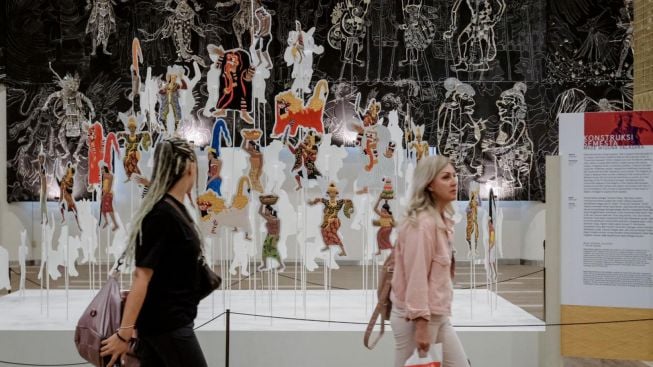
    Then there was a deretan installation of other Seni-designed works, including "Nawa Dewata" by the innovative Studio Seni, "Konstruksi Semesta" by Made Wiguna Valasara, and "Mataya Gate" by Yoka Sara.

    The installation known as "Mataya Gate" is located in the international terminal at Bandar Udara I Gusti Ngurah Rai. The Mataya Gate has a makna gerbang persembahan that is placed between the check-in and boarding areas and signals each visitor with good luck.

    Sandiaga emphasized the importance of maintaining the momentum created by Indonesia's G20 presidency in order to revive the nation's creative and tourism industries.

    He asserts that in order to ensure that the Indonesian G20 Presidency truly has a broad influence, both directly and indirectly on the community, all segments of society, as well as actors in the tourism and creative industries, must be actively involved. particularly in promoting economic growth and job development

    "Implementing the Indonesian G20 Presidency will provide that country a very favorable impression. Indonesia's vulnerability to COVID-19 is quite high, but it has the potential to rise to the occasion and demonstrate its ability to host international events. Additionally, Indonesia's G20 Presidency will highlight the country's rich cultural diversity and enhance its standing as a premier, sustainably run travel destination "Sandiaga remarked.
Indonesia Participates at London World Travel Market 2022

    Continuous image-building is required to position Indonesia as a desirable tourist destination that promotes sustainability and excellence. In order to promote Indonesia's favorable image and entice potential tourists from the British market and the rest of Europe, in particular.


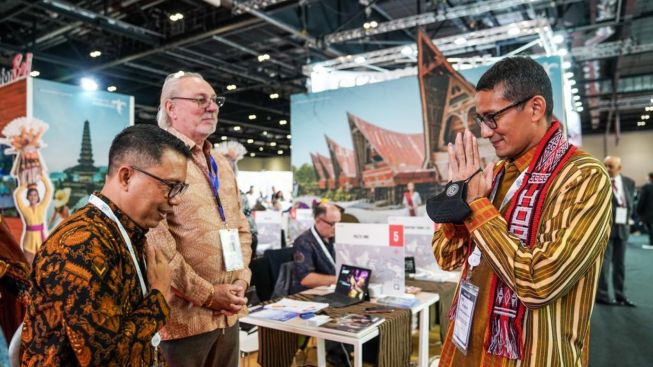
    The World Travel Market (WTM) London 2022, which was held at Excel in London, England, from November 7-9, 2022, was the second-largest tourism exhibition in the world. The Ministry of Tourism and Creative Economy (Kemenparekraf) took part in it.

    In a statement made in London on Monday, 7 November 2022, Minister of Tourism and Creative Economy (Menparekraf), Sandiaga Salahuddin Uno stated that Indonesia's participation in the tourism market, which has existed since 1980, is an effort by the Ministry of Tourism and Creative Economy to promote Indonesian tourism as one of the primary destinations in Southeast Asia for the UK market.

    "Given that Indonesia's tourism industry is now accessible to foreign visitors as of February 2022. Therefore, it is envisaged that by taking part in the London World Travel Market, we will boost the country's foreign exchange through tourism and promote the development of new, high-quality jobs "Sandiaga stated.

    Sandiaga also described other initiatives taken by the Indonesian government to boost tourism, such as the exemption of PCR test requirements for healthy foreign visitors upon arrival, the exemption from quarantine requirements for visitors who have received all recommended vaccinations, the application of visas on arrival specifically for tourism for 86 traveler's countries starting in September 2022, visa-free travel for ASEAN member countries, and second home visas.

    "The ease of obtaining a visa is a crucial factor that can boost the growth of international traveler arrivals to Indonesia and boost the competitiveness of Indonesian tourism on a worldwide scale. Indonesia expects between 3.5 million and 7.4 million overseas visitors in 2023. We think that a second residence visa with a 5- to 10-year validity period could open up a market for foreign visitors who match the requirements," said Sandiaga.

    Ni Made Ayu Marthini, the deputy for marketing at the Ministry of Tourism and Creative Economy, continued by stating that another goal of Indonesia's participation in WTM London 2022 is to assist 36 Indonesian tourism actors, including well-known hotel chains, travel agencies, and tour operators, in reactivating their businesses through exhibitions worldwide tourism.

    Bali and the five super priority tourism sites (DPSP), which are Indonesia's cornerstone locations, are just two of the alluring trip packages that the tourism industry players provide. Specifically, Lake Toba (North Sumatra), Borobudur (Central Java), Mandalika (North Sumatra), Labuan Bajo (North Sumatra), and Likupang (North Sulawesi).

    The goal number of passengers for Indonesia's participation in the WTM London 2022 is 29,500, and the estimated spending power of foreign visitors is Rp. 322,280,000,000, or 20,578,512 US dollars.

    "Continue to promote Indonesia as a quality- and sustainability-focused travel destination that is secure, comfortable, and competitive. In order to promote a positive image of Indonesia to prospective tourists in the European market in general and the British market in particular, "Ni Made said.

    The major market segments to be targeted, according to him, are the upper middle class and upper class in Europe since they still have the desire and financial means to take long-haul international vacations the next year, despite the possibility of a recession.

    The Ministry of Tourism and Creative Economy of Indonesia offers the 100 m2 Wonderful Indonesia Pavilion, which is situated at the AS900 booth.

    Kemenparekraf engages in a variety of different marketing initiatives in addition to participating in the global travel market, including joint promotions, familiarization trips, festivals, and collaborative marketing.

    Customized, personalized, localized, and smaller post-pandemic tourism products are now being developed by the Ministry of Tourism and Creative Economy. Additionally, the shift from low-quality mass tourist, which depends on sand, sea, and sun, to higher-quality tourism, which offers encounters with sustainability, tranquillity, and spirituality.

    The growth of tourist villages, theme villages, and creative cities is one of the areas of concentration. In Indonesia, tourist villages are currently a well-liked travel destination. There are 85,000 villages in Indonesia altogether, 7,500 of which are tourist destinations. Even the tourist hamlet has succeeded during the pandemic. As shown by the up to 30% rise in tourist interest in tourist villages.

    The Indonesian government actively administers the "Indonesia Spice Up The World (ISUTW)" initiative in addition to tourism villages. This program will encourage the growth of Indonesian restaurant chains abroad as part of Indonesian gastrodiplomacy in the future in order to activate as many as 4,000 restaurants abroad by 2024 and reach a value of US$ 2 billion in spice and seasoning exports.

Senin, 07 November 2022

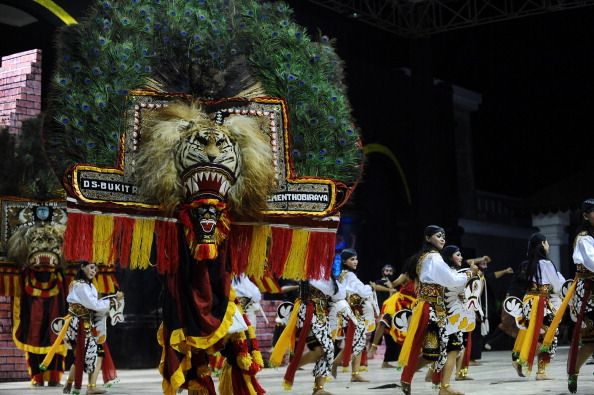
Reog Ponorogo's beginnings include mocking one another and looking for love up until the Royal War.

     Reog Ponorogo encompasses more than just performance. It appears that this picture presents two different interpretations of historical events.


    Reog Ponorogo is thought to have existed for hundreds of years, although no documents describing when this art form first appeared have yet been discovered. In light of the continued practice of animism and dynamism, Reog Ponorogo may have existed, according to Reog Ponorogo researcher Rido Kurnianto.

    "The year has not yet begun for the community development version. However, there are still occasional Ponorogo people that practice animistic and dynamic ceremonies. That implies that a considerable period has passed. Some even claim that ever since the settlers arrived in Ponorogo, "Rido said to DETIKCOM.

    This viewpoint, according to Rido, could not be dissociated from the tiger and peacock figures in the Reog Ponorogo show. In Javanese culture, these two creatures are potent symbols.

    "The tiger and peacock were pioneer creatures in the woods during their period. The strongest, wildest, and bravest animal was the tiger. Although the green peacock was the best and most gorgeous bird, "added he.

    There are white, blue, and purple peacocks, but they cannot compare to the beauty of the green peacock. Ponorogo's forefathers were particularly adept at selecting peacocks, which were later renowned as native to Java and the best.

    The community also performs a ceremony in which it rejects reinforcements using the combination of tiger and peacock. The society believes that when both factors are present, bad things might spiral out of control.

    Rido declared, "Ponorogo people with strong personalities and admirable morals, reinforcements won't come.

    Rido too has a different viewpoint of Reog Ponorogo's appearance. It's possible that this work dates back to the 14th or 15th century if it's connected to the version of the Reog Ponorogo legend.

    This theory is supported by the history of Reog Ponorogo's rise in the Kingdoms of Majapahit and Kediri. According to Rido, Suru Kubeng and Bantarangin are currently thought to be the two versions of the narrative that served as the inspiration for Reog Ponorogo's performances.

    Suru Kubeng, also known as Ki Ageng Fleas, is the original version. Ki Ageng Kutu created this reog as satire directed at King Brawijaya V, the reigning monarch of Majapahit at the time who was ruled by his consort Putri Campa.

    "The main rationale, according to Suru Kubeng, is satire or critique. Thus, the dance is meant to mock. The Reog Ponorogo art form's pivotal dance, Brawijaya V, has a barongan, or tiger riding a peacock. It's similar to how Dewi Campa rode Brawijaya V due to government regulations or how his wife rules the realm "Rido stated.

    The background of the Kingdoms of Bantarangin and Kediri is taken in the second version, Bantarangin. This narrative starts with a quest for love and ends in conflict.

    At initially, Putri Sanggalangit, a daughter of the Kingdom of Kediri, was to be the target of a marriage proposal from the King of Bantarangin, Kelana Suwandana.

    However, an emissary from the King of Kediri named Singabarong intercepted him on the way there. It appears that Singobarong also wants to contend for Princess Songgolangit. With his army of lions and birds, Singabarong arrived.

    Warok accompanied King Kelana and Bujanganom, who served as his deputy. Warok, the king's bodyguard, possesses the ability to use black magic to eliminate his adversaries.

    Then the two kingdoms engaged in a duel war. Due to the overwhelming strength of both sides, the battle lasted several days without a clear victor. As his energy diminished, they finally found common ground.

    Finally, King Bantarangin's request to marry his daughter was accepted by the King of Kediri. The peacock, lion, and warok army put on shows for spectators as the bride and groom get married.

    "Then stage reog, arable reog, or studio reog were born from this Bantarangin. In this instance, it is presented annually during national festivals, "Rido said.

    H. Ahmad Tobroni, also known as Mbah Tobron or Reog Ponorogo's elder, noted that despite their differences, they did not have any issues. He finds the contrasts to be intriguing and has been investigating reog since 1948.

    Both of them combine to provide a lovely performance, he remarked.

Minggu, 06 November 2022

Fact About Ujung Genteng Beach, Sukabumi, West Java

There are numerous stunning and intriguing natural tourism spots in Sukabumi, West Java. Ujung Genteng Beach is a single among them. You are aware that this location is a popular tourist destination.

Ciracap, Sukabumi Regency is home to Ujung Genteng Beach. Ujung Genteng Beach has unique facts in addition to being lovely and endearing. According to a number of sources, the following evaluations.


White sand

White sand covers the entire length of Ujung Genteng Beach, as far as the eye can see. The ambience is made even more lovely by the beautiful skies and the azure water. It seems sense that there are intriguing locations on this one beach where visitors can shoot a lot of shots.

Sunset

At Ujung Genteng Beach, you can then go sunset or sunset hunting. In the afternoon, you'll notice romantic overtones and lovely surroundings here.

Photographers typically look forward to that time, which is when the sun sets. Consequently, the sunset over here is quite cool.


Sea Turtle Conservation

You may enjoy more than only the seaside environment. However, you may also see turtles reproducing in this area, where their number is in danger and they are on the verge of extinction.


If you're lucky, you could get to see turtle hatchlings or young turtles being released into the water.


Culinary

Once you've had your fill of the sunset, the turtle hatchery, and taking pictures on the white sand. Local cuisine is available near Ujung Genteng Beach.

You can eat a variety of marine delicacies, including beleum layur (grilled layur fish), stir-fried octopus, and oxeye, a sort of snail found clinging to rocks.


Path leading to Ujung Genteng

There are several alternate routes that people can take if they want to take a trip at Ujung Genteng Beach. Now, you know, the route to the location might be simpler.

You can travel by vehicle from Jakarta utilizing the Pelabuhan Ratu route. If you're from Bandung, you can utilize a different route to reach the Sukabumi South Ring in the interim.

There is no reason to be perplexed. There are directions posted all along the route. In reality, you can ask citizens who live nearby for directions.


Prices for lodging and tickets

Villas, motels, and even some local residents' homes are available to rent for travelers who want to spend the night in the Ujung Genteng area. The cost varies as well.

The cost of the tickets is reasonable. Enough to cover Rp 10,000 each individual. Buses cost Rp. 10,000, four-wheeled vehicles Rp. 5,000, and two-wheeled vehicles Rp. 2,000.

The central government, meanwhile, gives Ujung Genteng priority since it is thought to have tourism potential and exceptional marine fisheries that the locals must make use of.

"The development of beaches that are part of the Unesco Global Geopark area of Ciletuh is of great importance to the central government, particularly the Coordinating Ministry for Maritime Affairs and Investment of the Republic of Indonesia" said acting Regent of Sukabumi, Zainul

Sabtu, 05 November 2022

7 things you should know about Indonesia's culture, health, and safety before visiting

    One of the world's richest nations in terms of culture, activity, wildlife, and pure adventure is Indonesia. It's huge too, with an estimated 13,466 islands. But most tourists are unaware of Indonesia's other islands (outside of Bali, Lombok, and the Gili Islands). For instance, Sumatra is practically a separate world (it's 80 times larger than Bali!). And yet, people continue to ask: " Is Indonesia worth to Visit?"

    Of course! One of the most excitingly diverse nations in the world, this chain of islands, many of which are culturally distinct, runs from west to east across a distance of more than 5000km (3110 miles). Here are 15 things you should know to assist you prepare your trip to Indonesia, from being ready before you leave to crucial etiquette and safety information.

Select the ideal season.

    Although the rainy season, which typically lasts from November to March, is something most tourists to Bali try to avoid, there is really never a terrible time to travel to Indonesia. Rains are often brief and quick, and they can create an unforgettable spectacular sound and light show even during the height of the monsoon. Several brilliant sunny days will frequently follow quite brief storms. Due to the fact that it is also low season, there are advantages such as fewer visitors (and lower pricing). However, the biggest drawback occurs after the first rains of the year, when plastic trash—one of Indonesia's worst problems—washes down rivers and onto beaches.


    The dry season typically lasts from September to March in West Papua and the Maluku Islands, which are located at the other ends of the archipelago. The enormous Sumatra (1000 km/620 mi long) and Kalimantan (Indonesian Borneo) are both large enough to have distinct weather patterns. Generally speaking, the best time to visit these regions to avoid the heavy rains is from March to October. This is crucial in jungle environments where some portions could become impassable during the rainy season.


Learn some key phrases in the language.

    One estimate states that Indonesia is home to one in ten of the world's languages. English is only spoken in tourist areas and many islands have hundreds of different languages. Thankfully for the traveler, everyone speaks Bahasa Indonesia (literally, "Indonesian language," with the exception of the smallest pre-schoolers and a few elderly in rural places). It's a fairly simple language to learn, and Indonesians from all walks of life will appreciate any attempt made to speak their own language, no matter how small. (Since Bahasa Indonesia and Malay are closely related, your efforts to learn the language can also benefit you when visiting Malaysia, Sarawak, and Sabah.)


Pack clothes for the tropics.

    Indonesia is a tropical country, so wherever you travel, you'll probably want shorts, t-shirts, or beachwear most of the time. However, the highlands may get quite chilly, so if you want to go hiking or climb a volcano, you should wear some warmer garments. Be aware that air conditioning in hotels and retail malls is frequently set to stifling temperatures, allowing fashionistas to dress in the kind of stylish couture you might associate with a European fall. Transportation (planes, trains, and buses) are also frequently shockingly chilly.

    Although you will frequently see this in Bali's party districts, it is quite disrespectful to go around in public while not wearing a shirt, especially when entering a store or restaurant. Male Indonesians frequently wear no shirt when at home, but they would never consider doing so when on someone else's property. On Bali, it is common to be expected that women cover their shoulders and wear sarongs when visiting temples. At the majority of the nation, wearing shorts is frequently prohibited in religious structures and ceremonies. Although dress restrictions are generally lax in Muslim Indonesia, you are more likely to feel at ease (and come across as courteous) in areas that predominantly muslim


Respecting the religious views of your hosts is part of Indonesian etiquette.


    The Muslim nation with the largest population is Indonesia. While this is accurate (87% of the 275 million people in the nation are Muslims), it is also false because Indonesia's Islamic laws are fairly liberal overall, with the exception of Aceh (northern Sumatra), where Sharia law is still in effect. Muslims in Indonesia are among the friendliest people you will ever encounter. A significant portion of the Maluku Islands, for instance, are largely Christian, whereas Bali itself is virtually totally Hindu. An extensive range of animistic beliefs coexist with these "formal" faiths, often becoming nearly separate from them. Any efforts you make to comprehend and respect the beliefs will make your journey richer.


Never ask the names of elderly folks.

    Speaking an elderly person's name is strictly forbidden in many traditional societies, including rural Bali. There is a widespread notion that saying a person's name can alert the gods that they have "ignore" them. The gods are said to hold a list of persons who are "due to be called." Old males are typically referred to as Bapak (mister) or Kakek, while old ladies are generally referred to as Nenek (grandmother) (grandfather). In general, Pak (mister) or Ibu should always be used to address an elderly person with respect (mother).


Know the regulations for LGBTQI+ travelers.

    Same-sex relationships are illegal in Aceh, where pre-marital sex is often seen as a felony. This is also true, albeit to a lesser extent, in Palembang, Sumatra. The majority of the rest of the country will be accepting of discreet same-sex couples.

    Generally conservative Indonesians view public displays of affection, regardless of sexual orientation, as unacceptable. While some regions of Indonesia, particularly Maluku, have historically accepted waria (believed to be men born with women's souls), the situation for Indonesians in same-sex partnerships is becoming more difficult as a result of rising anti-LGBTQI+ rhetoric from politicians. Few western-style tourist hotels have a problem with same-sex couples sharing rooms, but an increasing number of same-sex couples prefer the privacy of renting through websites like Airbnb, especially for travel to more remote locations.


Avoid consuming tap water.

    In Indonesia, not even natives drink the tap water; they either buy bottled water or boil it beforehand. Use bottled water to make ice and to brush your teeth whenever possible, just to be safe. There is a problem with plastic waste in Indonesia, so if you plan to stay in a place for longer than a few days (or are traveling with a group), think about purchasing a large 19-liter bottle (referred to locally as a galon), which you can then exchange for refills, rather than using dozens of 1-liter bottles during your stay.


Have you had a unique experience in Indonesia?

Tell us in the comments section.

10 Things You Should Know About Indonesia

Even though Indonesia is a wonderful nation, few people appear to be very knowledgeable about it. If you've ever been curious about this island country, keep reading to learn 10 interesting facts about Indonesia.

1. It has a Latin and Greek name.


The Latin word indus and the Greek word nesos, which both imply "Indian island," are the origins of the name Indonesia. Because Indonesia was formerly known as the Indian Archipelago or the East Indies Islands. For the people that live in the Indian Archipelago, English ethnologist George Windsor Earl offered the word "Indunesians" because both are rather lengthy. James Richardson Logan, one of his students, used Indonesia as a synonym for the Indian Archipelago in a study that was published.

2. It's Huge!

The majority of people are unaware of Indonesia's size. Flying from North Sumatra in the east to West Papua takes more than 12 hours. 1,919,440 square kilometers make up the entire landmass, which is nearly 8 times the size of the UK.


3. There are A LOT of Islands in it!

Over 18,000 islands make up the tremendous quantity of territory that makes up Indonesia. As a result, it is the world's largest archipelago and guarantees that you will never grow weary of exploring the nation.

The most well-known of these islands is arguably Bali, which receives more than 5 million visitors from abroad each year.


4. There Is A Lot of Coastline!

Indonesia has the second-longest coastline in the world, behind Canada, because of all the islands. The 54,000 kilometers of coastline in the nation are home to everything from majestic cliffs to immaculate beaches and even coastal cityscapes like the capital Jakarta.

5. People have lived there for at least a million years.

On the island of Java, some of the earliest fossilized remains in the world have been discovered. The first discovery, commonly known as Java man, dates back between 700,000 and 1 million years. Since the late 1800s, a great deal more have been discovered and may be even older. This proves that humans have lived in Indonesia for at least a million years!


6. Volcanologists' Dream


There are 127 active volcanoes in Indonesia. Although several of these, such Mount Bromo in Java and Mount Agung in Bali, may seem terrifying, they really draw visitors from all over the world. This does not, however, imply that they are not harmful. Before visiting any of Indonesia's active volcanoes, visitors should be informed of volcanic warnings and safe zones.


7. It is incredibly multicultural

There are more than 300 ethnic groups spread across the 18,000 islands of Indonesia. Every group has its own traditions and customs. While visiting Indonesia, you might come across a variety of great cultural attractions, such as the Balinese Hindu processions, the stunning freediving Bajau people in Sulawesi, or the exquisite Sasak crafts on Lombok.


8. Its Citizens Speak More Than 700 Languages

Over 700 indigenous languages, to be exact, are spoken by these thousands of ethnic groupings. The majority of Indonesians speak at least one foreign language in addition to their native tongue, which is Indonesian. The majority of people use Indonesian at work or school and their native language or mother tongue at home.


9. It Has Sites Recognized by UNESCO


There are 8 UNESCO World Heritage Sites in Indonesia. Komodo National Park, Lorentz National Park, Tropical Rainforest Heritage of Sumatra, and Ujung Kulon National Park are four of these. The Sangiran Early Man Site, Bali's Subak System, Prambanan Temple, and Borobudur Temple are the other four cultural sites.


All of these locations are lovely to explore and will provide you with fascinating insights into the past of this amazing archipelago.


10. It was a significant real estate transaction.

Director General of New Netherland Pieter Stuyvesant executed possibly the most well-known real estate transaction in history on September 8, 1664, when most of Indonesia was still governed by the Dutch. With the British, he exchanged the rights to a tiny island called New Amsterdam for the even smaller island of Run in the Banda Sea. New York was given the name after New Amsterdam, and the rest is history. So, New York might have continued to be a Dutch colony if it weren't for the tiny Indonesian island of Run.


Have You Discovered Anything New About Indonesia?

I hope you gained some new knowledge about Indonesia and that it has aroused your curiosity in traveling to this gorgeous region of the world. Were any of these details entirely unfamiliar to you? Tell us in the comments section below.

10 Best Fishing Locations in Indonesia

Indonesia, with its vast archipelago of over 17,000 islands, offers an abundance of fishing opportunities for both recreational and professi...